

 Analysis by Gamescozy
I like action games that let me make one clear decision and then immediately show whether it worked. Slow Mo Strike: Knives in Time is built around that appeal: you trace a path for a volley of knives while time is slowed, then release them and watch the action resolve. It is an easy idea to understand, but the pleasure comes from turning a quick gesture into a clean, coordinated strike. If you want a game that can fit into a spare moment without asking you to learn a complicated combat system, this is an appealing place to start.
One gesture turns planning into action
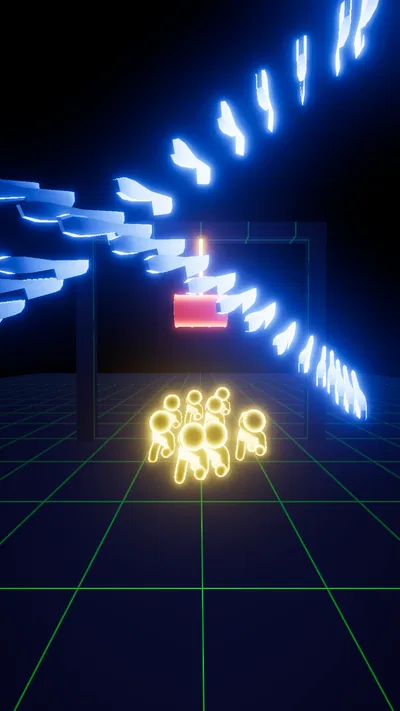
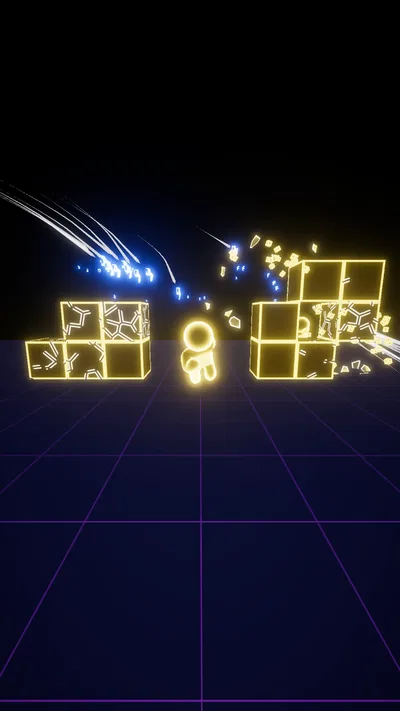
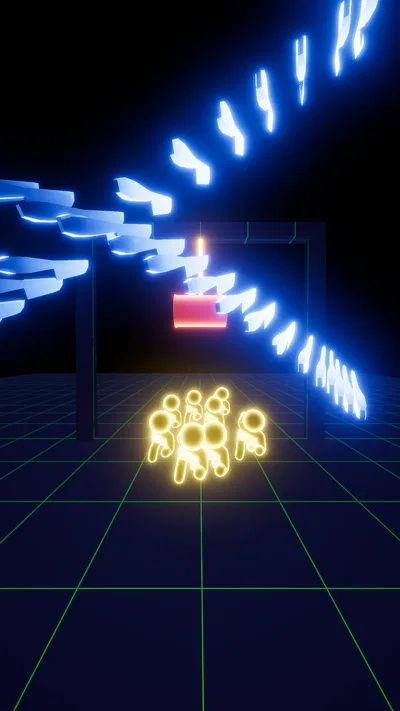
The first thing I notice about this action game is the pause between planning and release. Rather than relying on frantic tapping, the core interaction asks me to look at the scene, draw a route, and commit. The slow-motion framing makes that choice feel deliberate: I can take in the arrangement before the knives move, then enjoy the sudden change in pace when the attack begins.
The concept is centered on sending all thirty knives in one burst. That gives each attempt a simple objective and a satisfying sense of completion when the release comes together. The trace is not just decoration; it is the moment where I decide how the action should unfold. A careless line can make the payoff feel messy, while a more considered one makes the burst easier to read and more rewarding to watch.
That distinction also gives the game a useful rhythm for short breaks. I can play a round while waiting for a drink or between other tasks, because the basic action is immediate and does not require me to keep a long chain of controls in mind. It is especially suited to someone who enjoys aiming and timing more than navigating menus or managing a complicated character build.
There is a trade-off to this simplicity. Players who want a deep action game with extensive tactical options may find the central gesture too narrow. The appeal depends on whether drawing a route and seeing the result stay interesting for you; it is not trying to be a large-scale combat adventure. I would treat it as a focused arcade-style diversion rather than a replacement for a more involved action game.
Reading the scene before the release
My practical tip is to use the slow moment to plan, not merely to draw quickly. Before releasing, take a beat to notice how the scene is arranged and think about whether your line looks likely to carry the whole volley cleanly. The game’s premise rewards that small pause. Rushing through the trace may still feel lively, but the more satisfying attempts come when I have a reason for the path I draw.
This makes the game a little different from familiar action alternatives built around repeated attacks or constant movement. Here, the drama is concentrated in one setup-and-release sequence. If you enjoy the anticipation before a hit lands, that compression can be more engaging than a longer fight. If you prefer to improvise continuously and adjust your actions every second, a conventional action title will probably suit you better.
The same design works well for casual play with someone nearby. I can hand over the phone and explain the objective in a sentence, then let the other person try their own trace. That makes it easy to share without first teaching a list of controls. It is not a substitute for a multiplayer mode or a competitive feature; the appeal in this situation is simply that the action is understandable at a glance.
Why the feedback makes the loop work
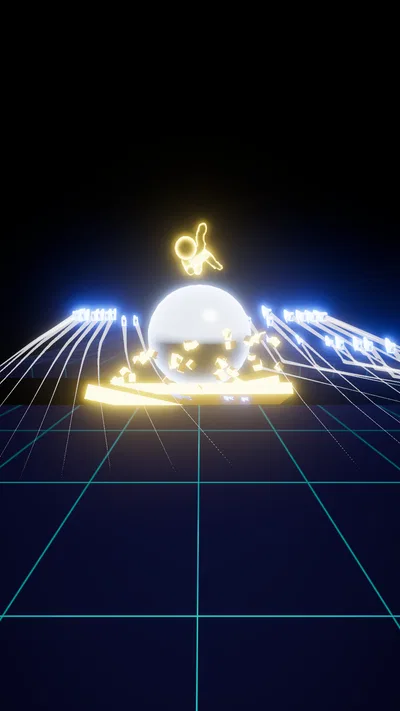
After the release, the important part is seeing the trace turn into motion. The slow-motion setup and sudden burst create a clear contrast: first I shape the action, then I get to watch it play out. That feedback is the main reward. When the knives travel in a way that feels deliberate, the result gives me a reason to try another attempt and make a better choice next time.
The design also makes cause and effect easy to understand. I am not left wondering which of several complicated systems produced the outcome; I can connect what I drew with what happened on screen. For a compact game, that clarity matters. It makes experimentation feel approachable, because I can change my approach on the next try instead of having to study a long set of mechanics first.
A useful way to keep the experience fresh is to treat each attempt as a small experiment. Rather than tracing the same kind of line automatically, I can vary the shape or direction and pay attention to how the burst looks. This is not a secret control technique or a promise of a hidden mode; it is simply a better way to engage with a game whose central pleasure is watching a planned action resolve.
The limitation is that a satisfying burst can also make the loop feel brief. If the visual payoff is not enough to hold your attention, the action may start to feel repetitive because the same basic decision returns each time. I would recommend it most to players who enjoy refining a simple gesture and appreciating its result. Those who need frequent changes in objectives or a wide range of combat tools may lose interest sooner.
A quick break, not a long session commitment
One realistic use case is opening it during a short pause in the day, playing a few attempts, and putting the phone away again. The direct objective helps because I do not need to remember a story thread or rebuild context after a gap. That makes it a better fit for fragmented free time than a game whose enjoyment depends on settling in for a lengthy mission.
It can also work when I want something active but not mentally demanding. The trace asks for attention, yet the idea is straightforward enough that I can focus on the immediate scene rather than a sprawling set of systems. The difference is important: simple does not mean entirely passive, but the game does keep the decision-making concentrated in one short action.
When an attempt does not look right, my advice is to change one thing at a time. If I redraw the route with a different shape and also rush the release, it becomes harder to tell what made the result better or worse. A modest adjustment keeps the next try informative. That habit is useful here because the short loop invites retries, and a deliberate retry feels more satisfying than repeating the same gesture without thinking.
What the game offers between attempts
The reward is less about a complex progression system and more about the immediate payoff of a well-planned burst. That is a clear strength for quick play: I can appreciate a successful attempt on its own, without needing a long session to reach a distant milestone. It is also the point where expectations matter. If you want a game to provide lots of unlocks, evolving strategies, or a substantial campaign, this particular hook may not be enough by itself.
The reset is part of the design’s appeal. Once the burst has played out, I can return to the same basic challenge and see whether a different trace produces a more satisfying result. The restart is not a failure of the game’s pacing; it is what gives the action its arcade-like quality. Each round offers a clean slate, which makes it easy to stop after one attempt or continue because I think I can do the next one better.
That repeatability is a strength for players who like short, self-contained challenges, but it can be a weakness for anyone who needs a strong sense of long-term change. I would not choose it as my main game for a long commute if I were specifically looking for a story, a roster of characters, or steadily expanding systems. For a few minutes of focused interaction, though, its narrow loop is easier to appreciate.
The best reason to begin another session is the feeling that the next trace might look cleaner. That motivation is small but tangible: I am not waiting for a complicated reward to unlock before the game becomes enjoyable. The action itself is the incentive. Whether that works over time depends on how much you enjoy repeating a compact challenge and noticing subtle differences in your own choices.
Who should install it, and who should pass
Slow Mo Strike: Knives in Time is made by KAYAC Inc. and is free to play. Its average rating is 4.7 from around eleven thousand ratings, and it has passed five million installs. Those figures suggest that the straightforward premise has found a broad audience, but my recommendation still comes down to the kind of interaction you enjoy: the numbers cannot tell you whether a one-gesture action loop is your taste.
The game is rated Teen, runs on Android 5.1 or later, and its current version is 017. Those details make it easier to judge basic fit before downloading, especially if you are checking compatibility on an older device. It was released on May 14, 2026, so it is a relatively new option for anyone browsing for a compact action game.
I would point it toward players who like immediate feedback, simple controls, and the satisfaction of making one deliberate move before watching the result. It is also a reasonable pick for someone who wants a game that can be understood quickly and revisited in short sessions. On the other hand, I would steer a player looking for deep combat, extended progression, or a substantial narrative toward a different action game. The focus here is much narrower and more dependent on the pleasure of the trace-and-release moment.
The loop verdict
For me, the most appealing part is the change in tempo: I get a quiet moment to plan, a quick release, and an immediate visual answer. That sequence makes the game easy to pick up, while the possibility of drawing a better route gives each reset a purpose. It does not need a complicated pitch to explain what I am doing, and that clarity is exactly why it works as a short-break game.
The same focus sets its limits. The action revolves around one central kind of decision, so players who want a broad range of systems may find the experience too repetitive. I would not recommend it as an all-purpose action game or as a long-form commitment. I would recommend it to a friend who enjoys quick, tactile challenges and wants a small burst of concentration followed by a clear payoff.
If that sounds like your kind of play, try approaching each attempt as a fresh little plan rather than rushing to repeat the last one. Take in the scene, trace with intention, and judge the result before starting again. That simple habit brings out the strongest part of the design: the moment when a line you chose becomes a burst you can immediately understand. If that feedback makes you want one more try, the game has done its job.